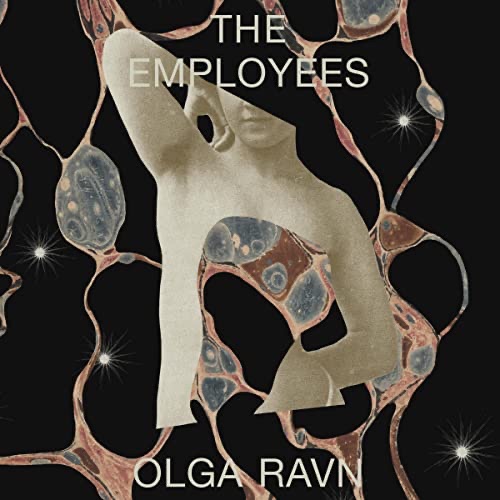
The Employees describes itself as “a workplace novel of the 22nd century.” It consists of statements from employees on the Six Thousand Ship. Some are human, while others are humanoid. They interact with strange alien forms known as “objects.” These objects come from a colonised planet called New Discovery. The crew places them in various rooms to study, clean, and care for them. We get only brief glimpses of the ship, the planet, and the institution behind the mission. The world remains unexplained.
The statements aren’t in order, and some names and details are missing. This makes it seem like an employer or investigator is scrolling through random testimonies. There’s no narrator to guide us. Instead, we piece together the story from snippets, gaps, and contradictions. We learn about the ship as the institution learns about its employees by examining their words.
We get brief glimpses of the ship, the planet, and the institution behind the mission. This puts the reader in a strange position. We empathise with the employees but also read their private statements like the authority does. We become witnesses while acting as investigators. The introductory note makes this purpose clear. The statements help investigate how the objects affect employees. The statements also check if these effects lead to lasting changes. The institution mainly wants to see if these changes boost performance, understanding, or skill development. It doesn’t care about the employees’ experiences; it wants to see if those experiences make them more or less useful.
Employees express their feelings in their own words. The institution sorts these feelings into categories. It decides whether a response is normal or deviant, whether an employee is doing well in their work, and whether they add value to production. An emotion is no longer just an emotion; it becomes a sign of adjustment or maladjustment. Employees can voice their thoughts, but the institution decides how to interpret them.
From the beginning, the objects appear to affect different employees in different ways. In the first statement, an employee describes cleaning an object that has laid an egg. The employee removes a cord connecting the egg to the object and notices that the object changes. The following day, it produces a sound like an electric rumble. It then becomes silent and stays that way. The employee admits they haven’t told anyone about what happened and wonders if the object’s silence is a sign of sadness.
Another employee feels fear and revulsion. They think the objects are hostile or indifferent and that their indifference feels harmful. This employee is unsettled by the closeness of the objects. They sense that one can become all the others. The objects seem to exist through each other, not separately. Their language breaks the employee down, suggesting they are many, not one.
The objects are described in language that is physical and sometimes repulsive. They ooze liquid and release powerful fragrances. They contain egg clusters, open pores, small stones, seeds and pink openings. They appear to be part plant, part animal and part something that defies definition. Still, they seem to have distinct qualities and respond to the employees who care for them. One crew member believes that the fragrance inside a room has its own will and intention. The smell is old, musty and decomposing. The crew member adds that it feels like the smell wants them to break off like a branch, rot, and disappear. The objects remain unknowable, but they bring hidden thoughts closer to the surface. This becomes clear in STATEMENTS 021 and 022. In the first, an employee says:
“I know you say I’m not a prisoner here, but the objects have told me otherwise.”
The objects appear to reveal something that the institution denies. The authority says the employee is free. However, the employee’s encounter with the objects makes their confinement visible.
Another employee says they’ve been told there are issues with their emotional reactions. These feelings are described as “functional maladjustments” that prevent them from working correctly. The employee has only lived on the ship and must train their cognitive flexibility to work on an equal footing with those who were born. They then ask, “Is this a human problem? If so, I’d like to keep it.”
The final sentence is powerful because the employee views part of themselves as a problem. Their feelings are seen as errors in how they function. Still, wanting to keep this “human problem” shows a kind of defiance. The employee embraces the feeling as part of who they are. They resist the institution’s urge to fix or remove it. What the organisation calls a defect might help the employee see their humanity.
In STATEMENT 044, the employee recalls the first smell that vanished after leaving the outside world. They call it “the smell of gravity.” This phrase is lovely because gravity is turned into a sensory memory of being on a planet, with weather above, ground below, and a body anchored in place. The same employee describes a dream they had of rooms filled with hay, dried herbs, and silver pomanders with eyes. In their dreams, twigs and branches come from the sheaves and crawl under doors, making them faint. Later, when the employee enters the rooms, they feel as if the objects know about these dreams, and they feel embarrassed. The writing is surreal and brings together ordinary and impossible things. It does this without explaining the difference between them.
The employees speak intimately to the unseen authority. Some share things they’ve never told anyone before. They talk about their loneliness, confusion, and uncertainty about who they are. A few feel like prisoners. Some relate to the objects, while others feel disconnected from both the objects and their coworkers.
The confessional tone presents a paradox. The statements let the institution observe and classify employees. At the same time, they also provide a space for employees to describe themselves in their own words. Sometimes, they speak as if addressing someone close, not an authority that may judge them. They reveal their souls, seemingly unaware of, or perhaps indifferent to, how their words might be used. This doesn’t mean they are completely free. Their statements are still part of an investigation, and some information is redacted.
The poetic quality of these statements is important. The institution uses the language of function, performance, updates, and production. In contrast, the employees speak of gravity, living branches, pomegranates, longing, and dreams. Their words capture experiences that defy simple workplace labels. The shared poetic language of the statements enhances this effect. It gives the novel a dreamlike unity, even with its fragmented structure. It also blurs the lines between individual speakers. Humans, humanoids, and even objects seem part of the same troubled mind. The institution tries to keep them separate, but the novel’s language keeps bringing them together, revealing inner lives that go beyond the institution’s categories.
One statement begins, “There’s human, and there’s humanoid,” suggesting these categories are clear-cut. Human employees seem to have higher status simply because they are human. For instance, a column of light lets people enter a certain room. However, it won’t show up for anyone deemed not human enough or lacking standing. Access may also be denied to an employee who has failed in their duties or caused problems for the organisation. Such a person is not “clean.” The differences are clear: some are born, and others are made. Some will die and decay, while others will not. Some feel nostalgia, while others cannot. Yet, these categories often blur. Jeppe, a humanoid officer, smells and smiles like a human. The speaker says, “What does it matter? I’m not bothered.” This dismissal shows how significant the difference is.
STATEMENT 049 highlights the cruelty of these categories. A humanoid feels upset when called a coworker instead of a human. When they cry, they are told they weren’t programmed to do so, that their response is an error caused by an update. The institution claims all employees are equal but insists on keeping categories separate. The humanoid is accused of becoming a “pet” due to their need to bond with the human crew. This shows the contradiction in the institution’s view of equality. Human and humanoid employees must work, but they can’t belong to one another on equal terms. The humanoid body looks like a human body, and they work for fourteen hours straight. Still, their desire to live near humans is seen as a flaw. The institution even attempts to shut them down, yet they keep reactivating themselves. This self-activation symbolises life breaking free from its assigned category.
The institution may have given the humanoids language to help them work and communicate, but it can’t fully control how they use it. They can question their makers, express grievances, and highlight system failures. The institution has created beings who not only follow its plans but also judge them.
The same struggle is reflected in the employees’ bodies. One worker starts to unravel after losing an add-on in an accident. The novel doesn’t clarify what an add-on is. However, another employee mentions getting one during an operation and then performing better than everyone else. It gives them greater standing within the organisation.
As the novel continues, this control grows more unsettling. A human worker is told to spy on a humanoid colleague. Another crew member refuses an update. One employee fears their private thoughts clash with their programming. They ask if there’s a list of thoughts and actions that oppose the programme’s will and if they can request forgiveness. When they doubt the institution’s infallibility, they quickly blame themselves. They wonder if there was an error in their update and ask to be rebooted. The employee struggles to see that their doubts could be valid or that the institution might actually be wrong.
As tensions rise, the gap between human and humanoid workers widens. The groups start to split. Communication breaks down, and information is omitted from statements. Crew members vanish or are reassigned. Reports of violent incidents surface, including one involving a humanoid killing a human. The killer feels no remorse for the act itself, only for the chaos it caused. They picture themselves as a pomegranate full of seeds, with each seed symbolising a potential killing. When all seeds are gone, they wish to meet the one who created them.
Violence is tied to how the institution treats the crew. Its policies create division, demand surveillance, and keep humans and humanoids apart. When it decides to dismantle the humanoid crew and the plan fails, it opts to terminate the entire ship. It claims this is to protect the ship and its cargo.
This final decision shows the institution better than any description could. Employees give their effort, memories, and personal experiences to the organisation, yet they are disposable. The ship and its cargo seem more valuable than the people inside it. The institution believes it can fulfil its mission by destroying its workers.
The novel shows resistance not just as rebellion. Resistance starts with language: naming feelings in new ways, seeing yourself in an object, questioning categories, or viewing doubt as a glitch. Even if authority controls the records, it cannot control what employees discover through speaking.

 The Convergence Project
Leave a comment